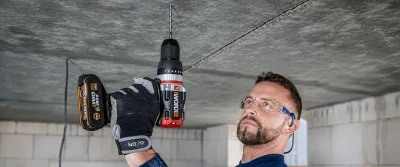
Choosing the right drill can make all the difference to your next DIY project. Whether you're assembling furniture, hanging shelves, drilling into brick or tackling a renovation, using the right tool will save time, reduce effort and deliver better results.
Today's homeowners have more choice than ever. From lightweight cordless drill/drivers and traditional hammer drills to advanced tools like the WORX Slammer and powerful SDS rotary hammers, each is designed for different materials and applications. Understanding where each tool excels will help you choose the best option for your workshop and your budget.
Choose the drill that matches the toughest material you expect to work with most often.
A cordless drill/driver is ideal for everyday DIY, a hammer drill adds reliable performance for brick and masonry, the WORX Slammer bridges the gap with enhanced cordless masonry capability, while an SDS rotary hammer is the specialist choice for heavy-duty concrete drilling and renovation work.
Before you start drilling
Always check for hidden electrical cables, water pipes and other services before drilling into walls. Wear appropriate eye protection, use the correct drill bit for the material, and follow the operating instructions supplied with your drill and accessories.
What is a cordless drill/driver?
The essential power tool for everyday DIY, repairs and home improvement.
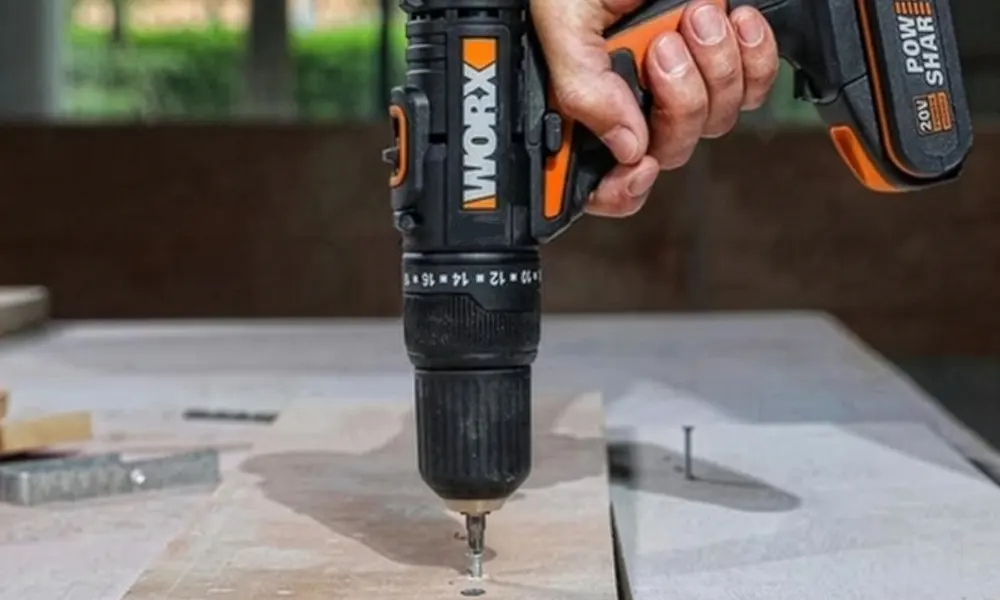
For most homeowners, a cordless drill/driver is the first power tool they buy. Lightweight, portable and easy to use, it's designed to drill holes and drive screws across a wide range of materials, making it one of the most versatile tools for everyday DIY.
Powered by a rechargeable battery, a cordless drill/driver uses a standard keyless chuck that accepts both drill bits and screwdriver bits. This makes it ideal for assembling furniture, installing shelving, building decks and tackling countless jobs around the home without the restriction of a power cord.
A cordless drill/driver is particularly useful for:
- Drilling timber, plywood and sheet materials
- Drilling mild steel and aluminium
- Driving screws for furniture assembly and cabinetry
- Building decks, pergolas and fencing
- Installing shelves, handles, hinges and fixtures
- General household repairs and weekend DIY projects
Why homeowners choose cordless drills
They're lightweight, convenient and incredibly versatile. One tool can handle hundreds of everyday jobs around the home, making a cordless drill/driver the foundation of almost every DIY toolkit.
While a cordless drill/driver excels when working with timber, metal and plastics, it isn't designed for regular masonry work. Drilling into brick can be slow and challenging, while dense concrete is often beyond its capabilities. If your projects frequently involve masonry, the next step is a hammer drill, while those looking for cordless versatility with improved masonry performance should consider the WORX Slammer.
What is a hammer drill?
The ideal companion for drilling into brick, block and masonry.
A hammer drill complements a cordless drill/driver by adding a mechanical hammering action. While a cordless drill is ideal for timber, metal and driving screws, a hammer drill is specifically designed to make drilling into brick, block and other masonry materials faster, easier and more efficient. With hammer mode switched off, it can still be used as a conventional drill for many everyday tasks.
Hammer drills are available in both corded and cordless models and use a standard three-jaw chuck that accepts a wide variety of drill bits and driver bits. Corded models, such as the WORX WX317.1 600W Hammer Drill, provide continuous power for extended jobs without worrying about battery life, making them an excellent choice for renovations, home maintenance and regular masonry work.
When hammer mode is selected, two internal cam plates rapidly strike against one another, producing a forward hammering action as the drill bit rotates. This repeated impact helps masonry bits break through brick and mortar more efficiently, reducing the effort required compared to a conventional drill.
A hammer drill is particularly useful for:
- Drilling timber, sheet material and metal
- Installing shelves, TV brackets and curtain rails
- Driving screws during assembly and installation work
- Drilling holes into brick, block and masonry
- General home maintenance and renovation projects
Why choose a hammer drill?
A hammer drill is an excellent companion to a cordless drill/driver. If your projects regularly involve drilling into brick or masonry, it provides the extra impact needed while remaining familiar and easy to use. Many homeowners keep both tools on hand—using the cordless drill for everyday jobs and the hammer drill whenever masonry is involved.
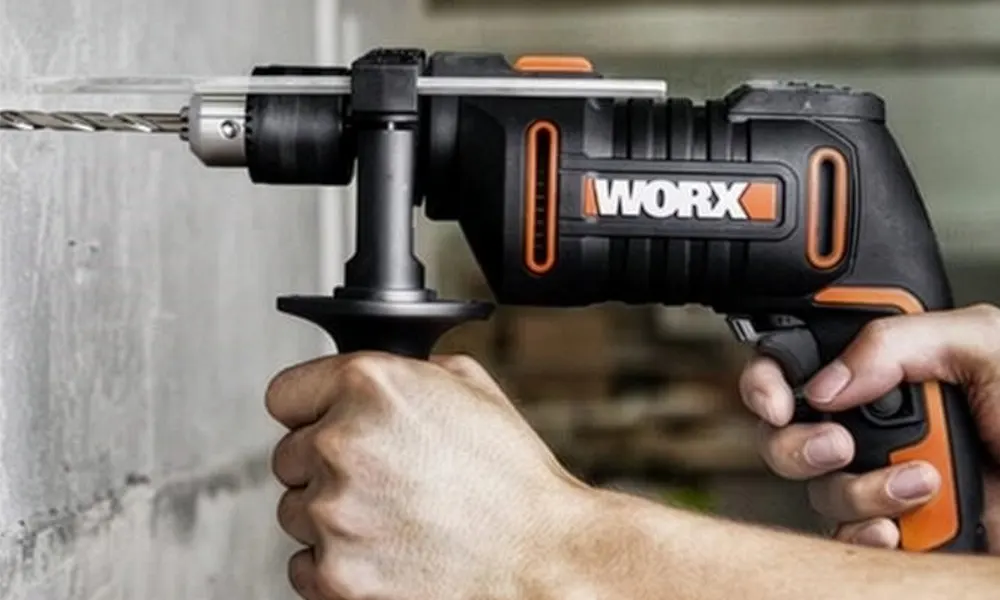
While a hammer drill is highly capable, it does have its limits. Dense concrete, large-diameter holes and repeated drilling into hard masonry require significantly more effort because the hammer mechanism relies on mechanical impact. If you regularly tackle demanding masonry work but still want the convenience of a cordless tool, the WORX Slammer offers an innovative alternative. For heavy-duty concrete drilling, larger anchor holes and chiselling, a dedicated SDS rotary hammer remains the specialist choice.
What is an SDS rotary hammer?
The specialist tool for heavy-duty concrete drilling, masonry and renovation work.
When your projects move beyond occasional DIY and into serious masonry work, an SDS rotary hammer is the tool designed for the job. Unlike a conventional hammer drill, an SDS rotary hammer uses a powerful pneumatic hammer mechanism that delivers significantly greater impact energy, allowing it to drill through concrete, stone and masonry with far less effort.
Rather than relying on mechanical cam plates to create the hammering action, an SDS rotary hammer uses an internal piston to generate powerful impacts. This makes drilling faster, more efficient and less tiring, particularly when working with dense concrete or drilling multiple holes in succession.
Another key difference is the SDS chuck system. Instead of gripping the drill bit like a standard chuck, the SDS mechanism allows the bit to slide slightly back and forth while remaining securely locked in place. This movement transfers impact energy directly into the masonry, improving drilling performance and reducing wear on both the tool and the user.
An SDS rotary hammer is the best choice when you regularly need to:
- Drill repeated holes into reinforced or dense concrete
- Install heavy-duty anchors and structural fixings
- Complete renovation and demolition projects
- Drill larger diameter or deeper masonry holes
- Work quickly on demanding construction or installation jobs
Good to know
SDS refers to the specialised chuck and bit system, not simply the hammer function. The combination of the SDS chuck and pneumatic hammer mechanism is what allows an SDS rotary hammer to outperform a conventional hammer drill when drilling into concrete and other hard masonry materials.
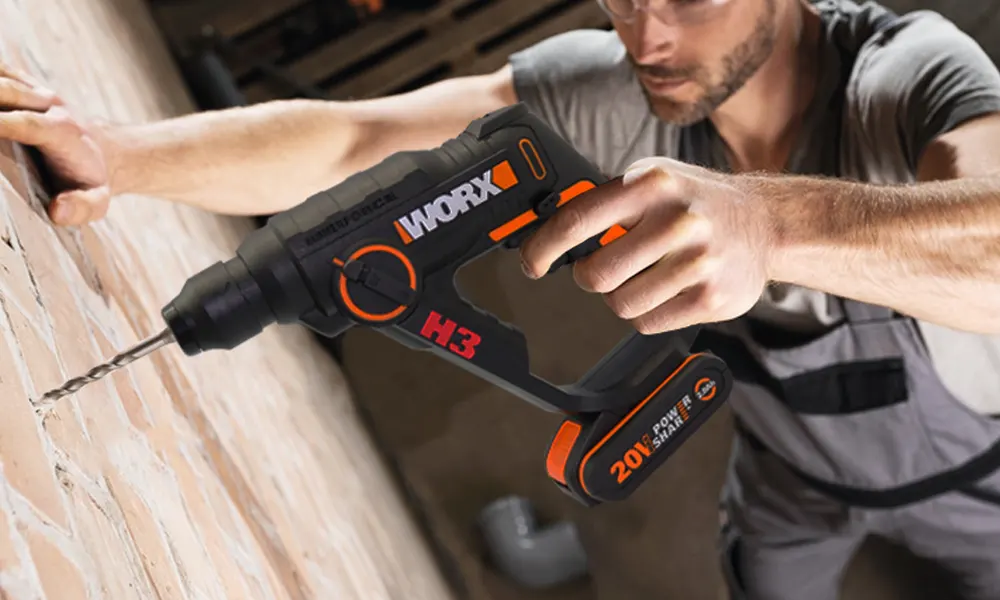
The trade-off is versatility. SDS rotary hammers are larger, heavier and designed primarily for masonry applications. While many models include a standard drilling mode, they are not intended to replace a cordless drill/driver for everyday DIY or a hammer drill for lighter household projects. They also require dedicated SDS drill bits and accessories.
Compare the four drill types
Comparing the strengths of a cordless drill/driver, hammer drill, WORX Slammer and SDS rotary hammer.
Each of these tools is designed for a different type of work. Rather than asking which drill is "best", it's more useful to consider the materials you'll work with most often. The table below highlights where each drill excels, helping you choose the right tool for your workshop or DIY projects.
| Comparison | Cordless Drill/Driver | Hammer Drill | WORX Slammer WX354 | SDS Rotary Hammer |
|---|---|---|---|---|
| Primary role | Everyday drilling and screwdriving | General drilling with masonry capability | Advanced cordless drilling with enhanced masonry performance | Heavy-duty concrete and masonry drilling |
| Chuck | Standard keyless chuck | Standard keyed or keyless chuck | 13 mm all-metal keyless chuck | SDS chuck |
| Timber | ||||
| Steel | ||||
| Screwdriving | ||||
| Brick & masonry | ||||
| Hard concrete | ||||
| Weight & portability | ||||
| Power source | 20V PowerShare Battery | 220V Corded | 20V PowerShare Battery | Battery or corded (model dependent) |
| Best suited to | Everyday DIY and home maintenance | DIY projects involving regular masonry drilling | Users wanting one cordless tool that comfortably handles timber, steel and masonry | Construction, renovations and heavy-duty concrete work |
The ratings above are intended as a practical guide rather than a laboratory comparison. Actual performance depends on factors such as the quality of the drill bit, hole diameter, material hardness and user technique. Every drill has its place—the key is choosing the one that best matches the work you do most often.
Which drill is right for your project?
Choose the right tool for the job—not just the biggest drill.
The best drill isn't always the most powerful one—it's the one that's designed for the work you'll be doing most often. Whether you're assembling furniture, hanging a television or renovating an entire room, matching the drill to the project will make the job quicker, easier and more enjoyable.
Furniture, cabinetry and general DIY
Best choice: Cordless Drill/Driver
Perfect for drilling timber and driving screws when building furniture, installing cabinets or completing everyday repairs around the home.
Shelves, curtain rails and wall fixings
Best choice: Hammer Drill
If you're regularly drilling into brick walls, a hammer drill provides the additional impact needed while still handling general drilling and fastening tasks.
TV brackets, security cameras and outdoor lighting
Best choice: WORX Slammer
Ideal when projects involve a combination of timber, steel and masonry. The Slammer's enhanced hammering performance makes repeated wall fixings faster while remaining a versatile cordless drill.
Pergolas, fencing and mixed-material installations
Best choice: WORX Slammer
When one project involves drilling into timber, steel brackets and brickwork, the Slammer offers the versatility to move between materials without changing tools.
Concrete anchors and structural fixings
Best choice: SDS Rotary Hammer
Large anchor holes, repeated drilling into concrete and demanding installation work are where an SDS rotary hammer delivers the greatest performance and efficiency.
Home renovations and construction work
Best choice: SDS Rotary Hammer
For renovation projects involving concrete, brick removal or extensive masonry drilling, an SDS rotary hammer is the specialist tool designed for the job.
Choose for the job you do most often
If most of your projects involve timber and furniture, a cordless drill/driver is all you need. If you regularly drill into brick, a hammer drill or the WORX Slammer will make life much easier. For frequent concrete drilling and renovations, an SDS rotary hammer remains the specialist choice.
Meet the WORX Slammer WX354
Traditional drill choices often involve a compromise. A cordless drill/driver offers outstanding portability and versatility, while a hammer drill provides better masonry performance. An SDS rotary hammer delivers maximum drilling power, but is designed primarily for heavy-duty concrete work.
The WORX Slammer WX354 was developed to bridge this gap. Using innovative Active Hammer Technology, it combines the convenience of a cordless drill with significantly enhanced masonry performance, making it ideal for homeowners, installers and tradespeople who regularly work across timber, steel, brick and concrete.
Rather than carrying multiple drills to every job, the Slammer gives you one compact cordless solution capable of handling the vast majority of DIY and installation projects with confidence.
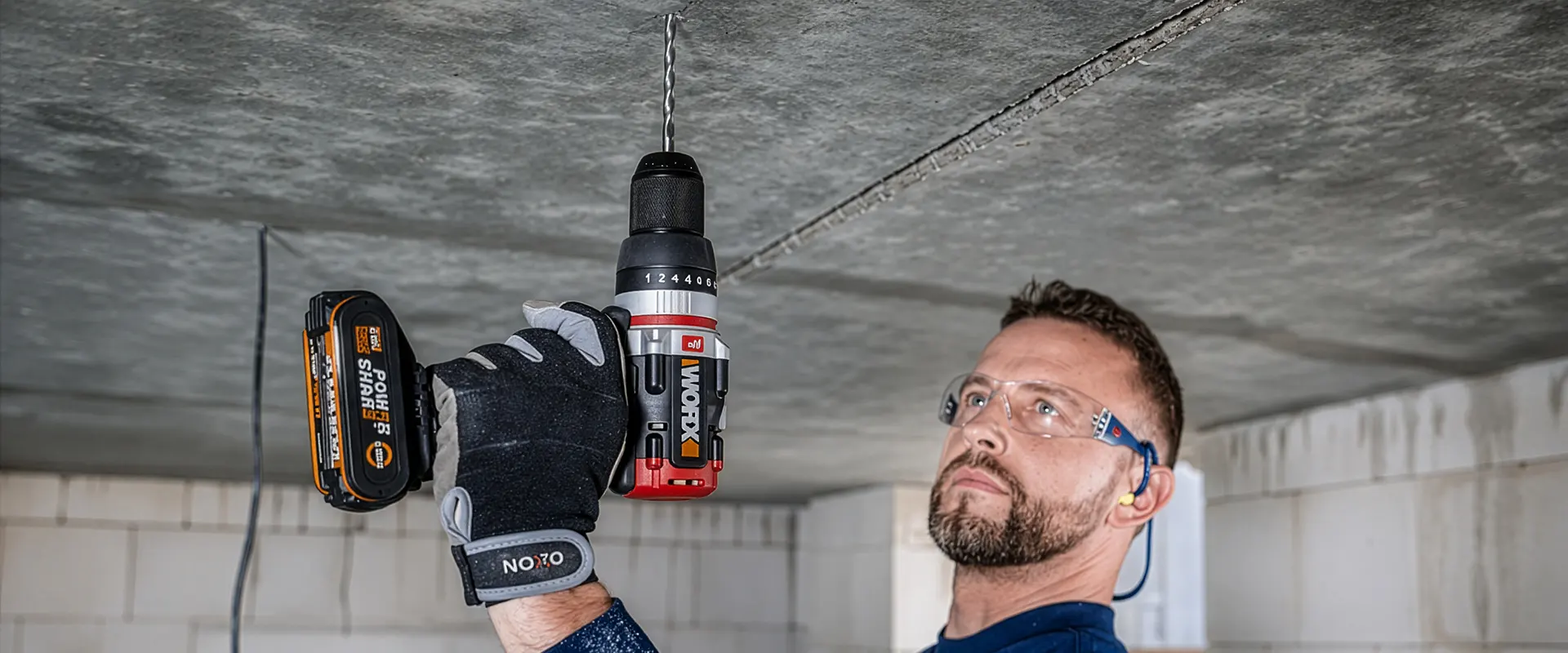
Key Features at a Glance
Who is the Slammer for?
If you already own a cordless drill but regularly find yourself drilling into brick, block or concrete, the WORX Slammer is designed for you. It provides noticeably stronger masonry performance while remaining compact enough for everyday drilling, fastening and installation work.
What makes Active Hammer Technology different?
Designed to provide stronger masonry performance while retaining the versatility of a cordless drill.
Conventional hammer drills use a simple mechanical impact mechanism to help the drill bit chip away at brick and masonry. This works well for many household jobs, but drilling into harder materials can require more pressure from the user and take longer to complete.
The WORX Slammer WX354 uses Active Hammer Technology, which is designed to deliver more effective impact performance than a conventional cordless hammer drill when drilling into masonry. The goal is not to replace every SDS rotary hammer, but to provide a more capable masonry mode in the same tool you use for drilling timber, steel and driving screws.
Rather than carrying separate drills for different materials, the WX354 allows you to switch between multiple operating modes depending on the task at hand.
The WX354 provides modes for:
- Ordinary drilling in timber, plastics and metal
- Controlled screwdriving and fastening
- Hammer drilling in brick and masonry
- Active Hammer mode for demanding brick, masonry and light concrete drilling
Where Active Hammer Technology makes the biggest difference
Active Hammer Technology comes into its own on projects that involve several different materials. Whether you're mounting a TV bracket, installing security cameras, fixing cable trays, running conduit or tackling a home renovation, you can move from timber and steel to brick and masonry without constantly changing tools.
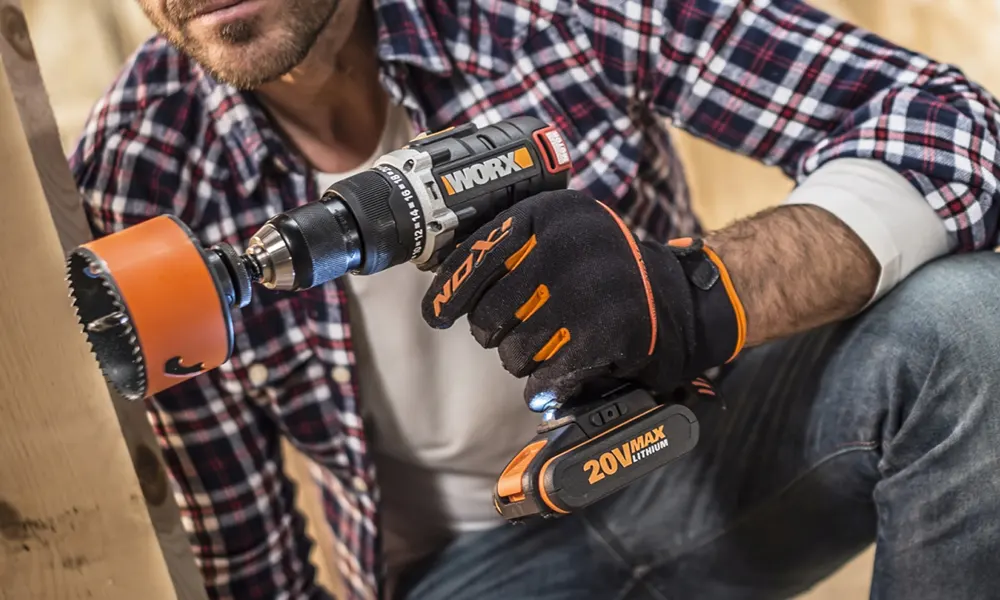
Choose the right drill for your next project
Whether you're assembling furniture, installing shelving or drilling into concrete, there's a WORX drill designed for the job.
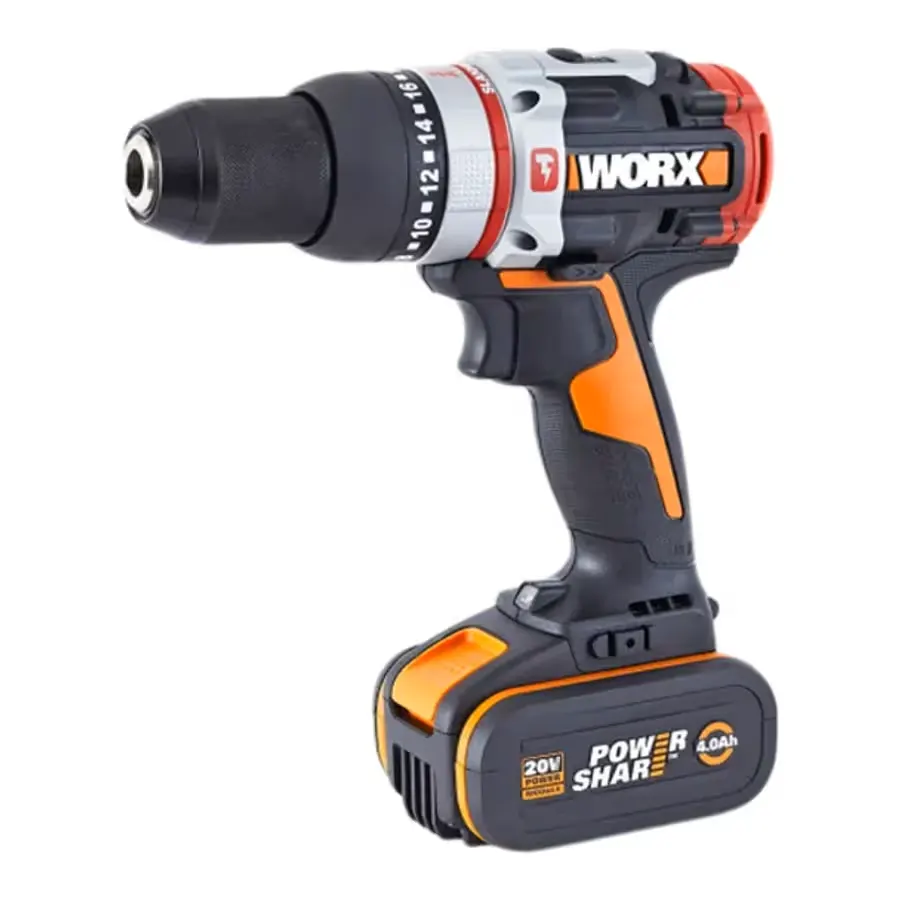
WORX Slammer WX354
The Slammer is designed for users who need one cordless tool capable of handling timber, steel, screwdriving, brick, masonry and light concrete. Thanks to Active Hammer Technology, it bridges the gap between a conventional hammer drill and a dedicated rotary hammer, making it an excellent all-round choice for demanding DIY and installation work.
Explore the Slammer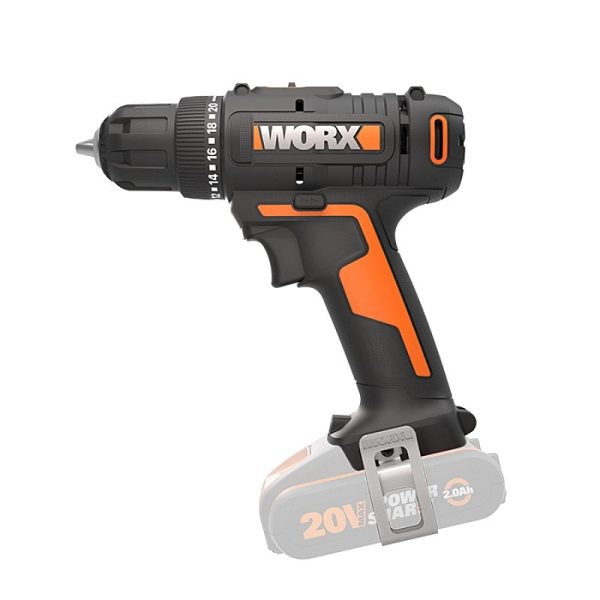
WORX 20V Cordless Drill Kit
Ideal for furniture assembly, timber projects, fastening and general home maintenance.
View Product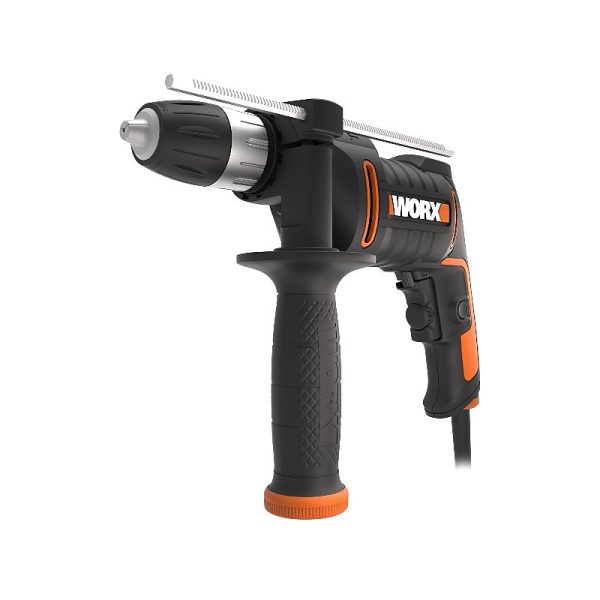
WORX WX317.1 Hammer Drill
A reliable corded hammer drill for homeowners who regularly drill into brick and masonry.
View Product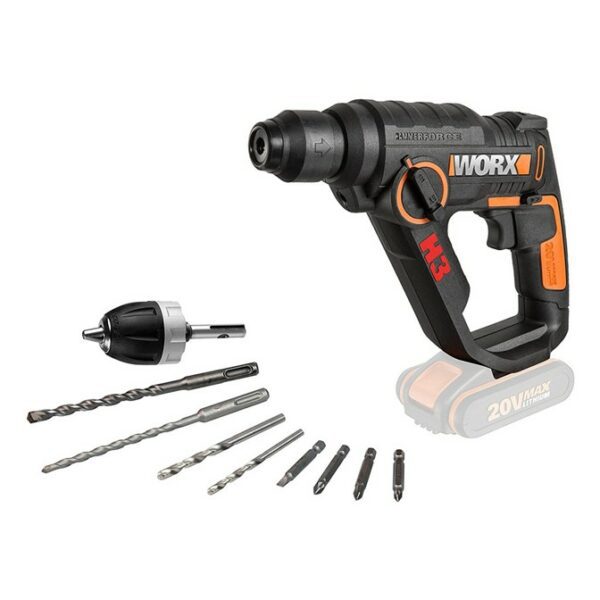
WORX H3 Rotary Hammer
A compact SDS rotary hammer designed for demanding drilling into brick, masonry and concrete.
View ProductFrequently asked questions
Answers to common questions about cordless drills, hammer drills, SDS rotary hammers and the WORX Slammer.
What's the difference between a cordless drill and a hammer drill?
A cordless drill/driver is designed primarily for drilling into timber, plastics and metal, as well as driving screws. A hammer drill adds a hammering action that helps drill into brick and masonry more effectively.
Do I need a hammer drill for brick walls?
For occasional household jobs such as hanging pictures, shelves or curtain rails, a hammer drill is usually sufficient. If you regularly drill into masonry or harder materials, a tool with stronger hammer performance, such as the WORX Slammer or an SDS rotary hammer, may be a better choice.
Can a hammer drill drill into concrete?
Yes, although performance depends on the hardness of the concrete, the hole size and the quality of the masonry bit. For repeated drilling into dense concrete, an SDS rotary hammer generally delivers faster and more efficient results.
What does SDS mean?
SDS refers to a specialised chuck and drill bit system used by rotary hammers. The design allows the bit to move slightly inside the chuck so the hammer mechanism can transfer energy more efficiently while drilling into masonry and concrete.
Can an SDS rotary hammer be used as a normal drill?
Some models include a rotary-only mode and can accept drill chuck adapters, but an SDS rotary hammer is still designed primarily for masonry work. A standard cordless drill remains the better choice for everyday drilling and screwdriving.
Is the WORX Slammer an SDS rotary hammer?
No. The WORX Slammer WX354 uses a conventional 13 mm keyless chuck and Active Hammer Technology rather than an SDS chuck. It is designed to provide enhanced masonry performance while remaining a versatile cordless drill for everyday use.
Which WORX drill should I buy?
If your projects mainly involve timber, furniture and DIY, choose the WORX 20V Cordless Drill Kit. For regular drilling into brick and masonry, the corded WX317.1 Hammer Drill is a dependable choice. If you want one cordless tool that can handle a wide variety of materials, the WORX Slammer WX354 offers exceptional versatility. For demanding drilling in concrete, the WORX H3 SDS Rotary Hammer is the best option.
Does the quality of the drill bit matter?
Absolutely. Even the best drill will struggle with a worn or unsuitable bit. Always choose the correct drill bit for the material you're working with and replace blunt or damaged bits to achieve faster, cleaner and safer drilling.
The right drill is the one that matches your real workload
A conventional hammer drill remains excellent for ordinary household DIY. An SDS rotary hammer is the specialist for intensive concrete and masonry work. The WORX Slammer fills the valuable space between them, giving homeowners and installers one versatile cordless drill for fastening, timber, steel, brick and more demanding masonry applications.