
Spring growth can arrive quickly. A little preparation before buds open and gardens become active can make trees safer, healthier and easier to manage for the rest of the season.
This checklist focuses on practical jobs most homeowners can assess from ground level. It also explains when a compact one-handed chainsaw may be enough and when a larger cordless chainsaw is the better fit.
Safety first
Never cut near power lines, work from an unstable ladder or attempt to remove large suspended limbs. Use a qualified tree professional whenever the job is beyond safe ground-level maintenance.
Before You Start: Basic PPE
Even routine pruning deserves a little preparation. The right clothing and safety gear can make garden maintenance more comfortable while helping reduce the risk of injury.
Work Gloves
Protect your hands from thorns, splinters and rough bark while helping you maintain a secure grip on tools.
Safety Glasses
Help keep wood chips, dust and small pieces of bark out of your eyes while cutting or trimming.
Safety Helmet
Consider a helmet when working beneath branches where small pieces of wood or debris could fall.
Sturdy Footwear
Wear closed shoes or boots with good grip to improve footing and protect your feet from dropped branches.
Inspect every tree before you start cutting
A careful walkaround prevents rushed decisions.
Look for cracked limbs, loose bark, dead tips, branches rubbing against each other and growth that has moved too close to roofs, gutters, walls or pathways. Check the ground around each tree for lifting roots, fungal growth or signs that the tree has begun leaning.
Start with a simple plan
Mark the branches that genuinely need attention. Pruning is easier to control when you work selectively rather than cutting as you go.
Remove dead, diseased or dying branches
Deadwood can become brittle and unpredictable.
Dead branches do not flex like healthy wood and may break during strong spring winds. Remove manageable branches before new foliage hides them. Cut cleanly and avoid tearing bark below the cut.
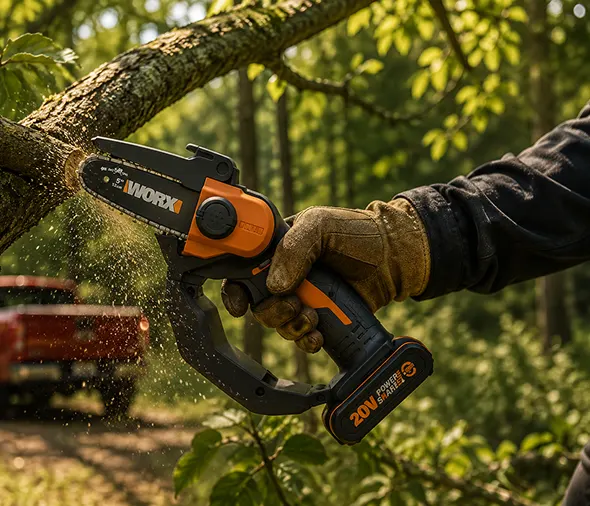
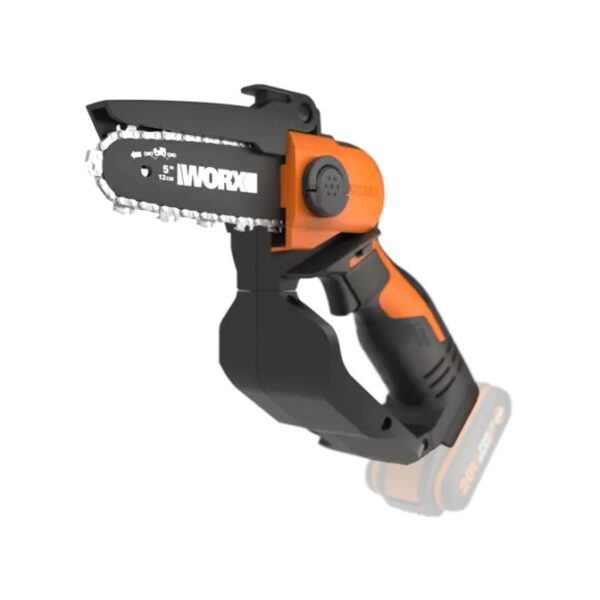
Best matched tool: compact one-handed chainsaw
For smaller accessible branches, a compact saw provides easier handling and more control than a full-size machine.
Explore the WORX WG324E.9 →Clear old storm damage
Split or hanging branches should not be left into the growing season.
Winter weather can leave branches partially attached. These may look stable until wind or new foliage adds weight. Remove small damaged sections from the ground, but call an arborist for hung-up limbs, trunk splits or damage above head height.
Do not stand beneath a damaged branch
Work from a clear position and maintain an escape route. A branch under tension can move suddenly when cut.
Prune fruit trees before vigorous growth begins
Selective pruning can improve light, airflow and access.
Remove obvious deadwood, inward-growing shoots and branches that cross or rub. Aim for a balanced shape rather than stripping the canopy. Different fruit species respond to pruning at different times, so confirm the correct seasonal approach for the tree in your garden.
Keep cuts purposeful
More cutting is not automatically better. Over-pruning can stress a tree and encourage weak, rapid regrowth.
Manage branches over paths, roofs and driveways
Deal with practical clearance before spring foliage adds weight.
Reduce low branches that interfere with walking routes, gates and garden access. Check for limbs rubbing on roof tiles or depositing leaves directly into gutters. Avoid removing large structural branches without professional guidance.
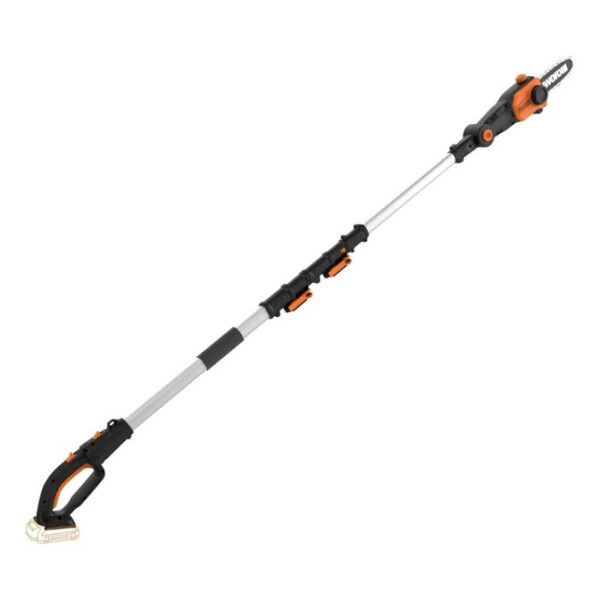
Best matched tool: WORX WG349E.9 Pole Saw
Ideal for pruning higher branches safely from the ground. The 4 metre reach makes it easy to trim over paths, driveways and garden structures without the need for a ladder.
View the WORX Pole Saw →Thin crowded or rubbing branches
Good structure helps light and air move through the canopy.
Where two branches rub, one may eventually become damaged. Remove the weaker or less well-positioned branch. Also clear vigorous shoots that crowd the centre of smaller trees, provided the species and season are suitable for pruning.

Best matched tool: WORX Nitro one-handed chainsaw
Its compact, brushless design gives you excellent control when selectively removing smaller branches in crowded canopies, making it ideal for precision pruning and shaping.
View the WORX Nitro one-handed chainsaw →Cut larger fallen branches into manageable lengths
Turn safe, usable wood into tidy stacks instead of garden clutter.
Once branches are safely on the ground, trim off side growth and process the main sections into lengths that are easier to move, store or season. Support the wood properly so the chain cannot contact soil or stone.
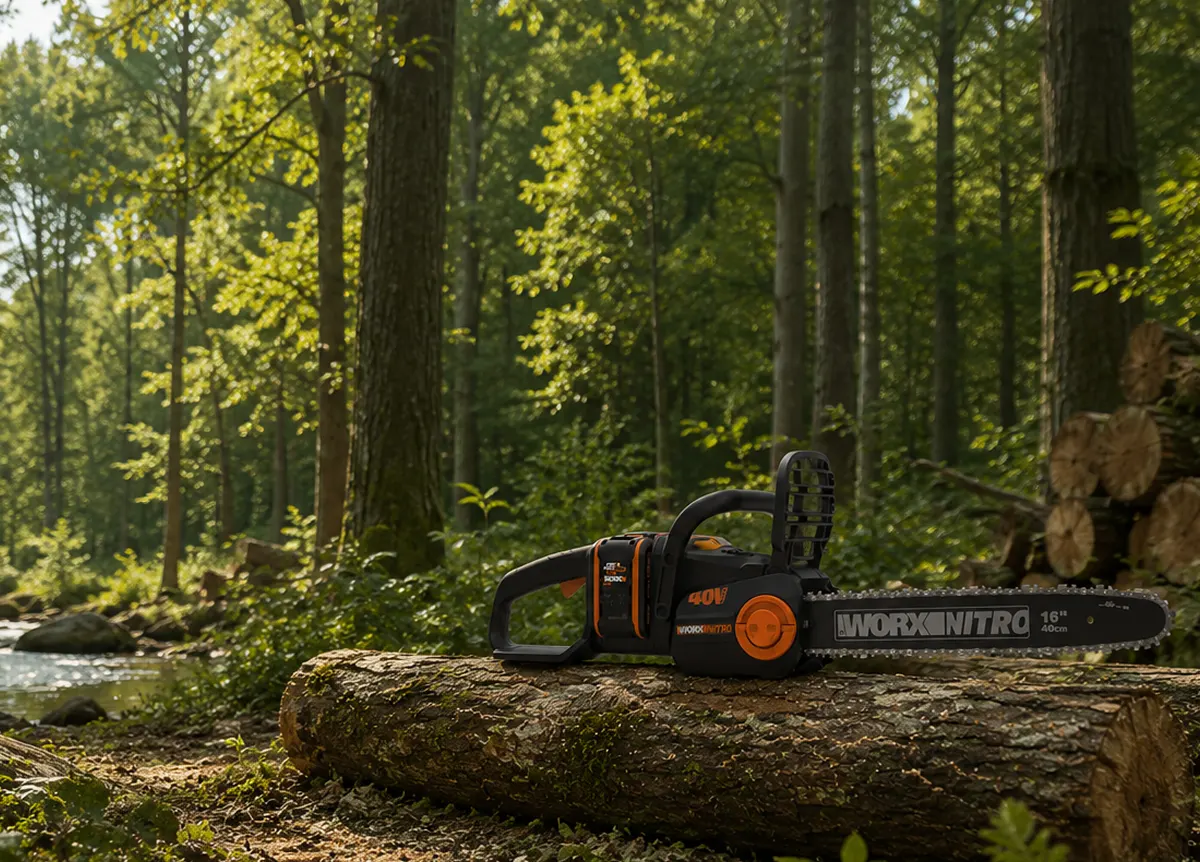

Best matched tool: WORX Nitro WG385E
The 40V platform and 400 mm bar make this the stronger option for larger branches and log cutting around the garden.
View the WORX WG385E →Finish with a garden-wide safety check
Clear the work area and prepare for spring weather.
Remove cuttings from paths, check that remaining branches are stable and inspect fences, sheds and gutters for debris. Clean your saw, check chain condition and store batteries according to the manufacturer's instructions.
Clear paths
Remove sawdust, loose branches and any tripping hazards from walkways and work areas.
Inspect tools
Check chain tension, sharpness, lubrication and the general condition of the saw before storage.
Plan follow-up
Make a note of trees, limbs or structural concerns that need professional assessment.
WORX Nitro WG385E
A 40V cordless chainsaw with a 400 mm bar, suited to larger branches, log cutting and more demanding garden maintenance.
View the WG385EWORX Nitro One-Handed Chainsaw
A compact brushless option for controlled pruning, branch reduction and garden clean-up where manoeuvrability matters.
View the Nitro modelWORX WG324E.9
A compact 20V tool-only chainsaw for lighter pruning, small branches and everyday garden maintenance.
View the WG324E.9WORX WG349E.9 Pole Saw
Reach branches up to 4 metres high without climbing a ladder. Ideal for pruning taller trees safely while keeping both feet firmly on the ground.
View the Pole SawLooking for something different? Browse our complete range of cordless chainsaws and pole saws.
Shop All WORX Chainsaws